
Closing Ceremony of COMCEC- and COMSTECH-Funded International CRISPR/Cas Genome Editing Training Held at CEMB
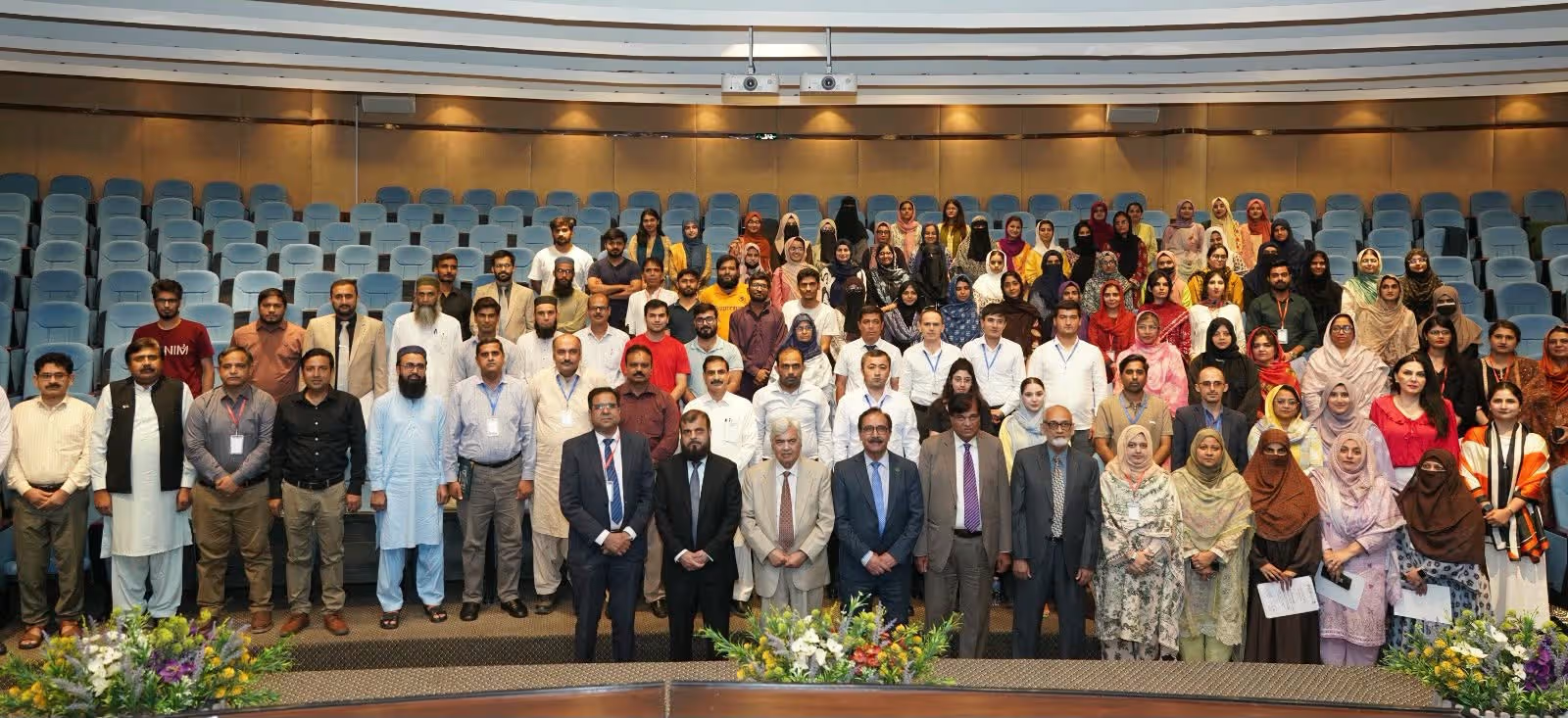
September 24, 2026: The closing ceremony of the COMCEC- and COMSTECH-funded four-day international training programme on “Genome Editing and Crop Biotechnology to Address Climate Challenges” was held at the Riazuddin Auditorium, Centre of Excellence in Molecular Biology (CEMB), University of the Punjab.
Chief Guest, President Pakistan Academy of Sciences, Prof. Dr. Kauser Abdulla Malik (HI, SI, TI), graced the occasion along with Dean Life Sciences, Health Services Academy Prof. Dr. Shahid Baig, Former Director CEMB Prof. Dr. Tayyab Husnain, Director CEMB Prof. Dr. Moazur Rahman (FPAS) and workshop focal person Prof. Dr. Abdul Qayyum Rao. International participants from Uzbekistan, Azerbaijan, Bangladesh and Tajikistan, along with Pakistani researchers, faculty members, industrial collaborators and students, were also present.
Prof. Dr. Abdul Qayyum, while giving an overview of the workshop, said that the proposal was approved for funding by COMCEC with the support of SESRIC, while COMSTECH provided generous support for its execution. He appreciated the organizing team and trainers and hoped that the international participants had gained valuable knowledge and built new connections.
International and national participants appreciated CEMB’s efforts in organizing the training programme.Dr. Ulkar İbrahimova from Azerbaijan said the participants gained valuable knowledge, particularly through the hands-on sessions, and thanked the trainers, CEMB, COMCEC and COMSTECH for their support. Abdushukur Xmatullayev from Uzbekistan said the training provided both technical knowledge and a deeper understanding of modern technologies, while fostering connections for future collaboration. Saidmurodzoda Nekruz from Tajikistan thanked Dr. Abdul Qayyum and Dr. Aneela and said the training was very helpful in learning gene-editing techniques.Sadia Hoque Tamanna from Bangladesh thanked COMSTECH, CEMB and COMCEC and appreciated the hard work of the CEMB team. She said she would share the knowledge gained during her fellowship with colleagues in Bangladesh. Dr. Muhammad Anwar A Khan from BIUTEMS and Hiba Asim from FCCU also thanked the organizers and trainers.
Dr. Moazur Rahman thanked the distinguished guests, former directors, National Professor Dr. Muhammad Idrees, organizers and participants. He highlighted CEMB’s work in agricultural research and GMO testing and appreciated the efforts of the organizers. He thanked COMCEC, COMSTECH, SESRIC and NARC for their support and reaffirmed CEMB’s commitment to advancing scientific research.
Chief Guest Prof. Dr. Kauser Abdulla Malik (HI, SI, TI) recalled the molecular course and training programme organized by Prof. Dr. S. Riazuddin (The Late) in collaboration with Cold Spring Harbor Laboratory at NIAB in 1981. He appreciated CEMB for continuing this tradition of scientific training, congratulated the organizers and encouraged participants to maintain connections with CEMB for future collaboration.
Certificates were distributed to successful participants and trainers. Souvenirs were distributed to Former directors Prof Dr Tayyab Husnain and Prof. Ahmed Ali Shahid and a Shield was presented to Dr Moazur Rahman. CEMB team presented shield to chief guest Prof. Dr. Kauser Abdulla Malik. Industrial Collaborator Four Brothers also presented souvenirs to dignitaries.
It is worth noting that the first three days during training provided participants with theoretical lectures and hands-on training in CRISPR/Cas genome editing and related crop biotechnology techniques, with a focus on developing research capacity to address climate-related challenges in agriculture. The fourth day of the programme consists of a field trip for the international participants on September 25, 2026.
The international trainees were nominated by research and academic organizations from participating countries, including the Institute of Genetic Resources and Department of Cytogenetics, Ministry of Science and Education of the Republic of Azerbaijan; Department of Technical and Fodder Crops, Institute of Genetic Resources, Azerbaijan; Center for Advanced Technologies, Uzbekistan; Institute of Botany, Plant Physiology and Genetics, National Academy of Sciences of Tajikistan; Cotton Development Board, Ministry of Agriculture, Bangladesh; and Institute of Molecular Biology, Public Legal Entity, Ministry of Science and Education of the Republic of Azerbaijan.
Pakistani participants represented institutions including Balochistan University of Information Technology, Engineering and Management Sciences (BUITEMS); Institute of Biotechnology and Genetic Engineering, University of Sindh, Jamshoro; Institute of Molecular Biology and Biotechnology, Bahauddin Zakariya University, Multan; Forman Christian College University (FCCU), Lahore; Agricultural Biotechnology Research Institute, Faisalabad; CAS-AFS, University of Agriculture Faisalabad and Agriculture Biotechnology Research Institute (ABRI), Ayub Agriculture Research Institute (AARI).
As part of the international training programme, Ms. Alia Serifi Orttuk from SESRIC also delivered an online lecture to the participants.
Speaking on the occasion, the organizers highlighted the importance of international collaboration and capacity building in advanced genome editing technologies. The participants appreciated CEMB for hosting the training programme and thanked the organizers, trainers and support team for their efforts and hospitality. They also expressed their interest in continuing scientific collaboration and strengthening research linkages among participating institutions.
The programme provided an important platform for researchers from OIC member countries and Pakistan to share knowledge, develop practical skills and explore collaborative opportunities in CRISPR/Cas genome editing and climate-resilient crop biotechnology.